Read our latest news
There are some trips where every stop seems carefully planned and everything falls neatly into place. Then there are the adventures in Peggy, where the unexpected becomes the highlight of the day and where getting slightly lost is all part of the fun.
Our latest journey took us east, all the way to Lowestoft, Britain's most easterly town. A place shaped by the sea, fishing, shipbuilding and more recently the giant wind turbine that now dominate parts of the coastline.
After parking Peggy, we headed off on foot to explore the famous Scores. These steep pathways and alleyways have linked the clifftop town with the fishing community below for centuries. Originally worn into the cliffside by generations of fishermen and workers making their way between home and the beach, they are now one of Lowestoft's most distinctive features. Walking down the winding passages, it was easy to imagine the bustle that once filled them during the height of the herring fishing industry.
One particular passage caught our imagination.Maltsters Score, often locally referred to as "Murderers' Passage" because of its dark reputation and twisting layout. The Scores themselves are ancient pathways cut into the cliffs, linking the old High Street with the fishing community and Beach Village below. The word "score" comes from the Old Norse skoran, meaning "to cut" or "to make a line," reflecting how these routes were originally formed through the cliff face.
Maltsters Score gained a sinister reputation during the nineteenth century. Its sharp bends and hidden corners led to stories that sailors returning from the town's inns were sometimes waylaid and robbed as they made their way back to the beach below. Local folklore suggested the passage was almost designed as an ambush point, earning it the nickname "Murderers' Passage." However, historians have found little evidence that murders actually took place there, and many of the tales appear to have grown from Victorian storytelling rather than documented events.
Today, the passage is best known for its atmospheric character, historic brickwork and distinctive crinkle-crankle walls, a traditional Suffolk design that snakes along part of the route. Walking through it offers a fascinating glimpse into Lowestoft's fishing heritage and the daily lives of the fishermen, merchants and townsfolk who used these pathways for centuries.
Despite its dramatic nickname, Murderers' Passage is now a peaceful and fascinating reminder of Lowestoft's maritime past rather than a place of danger.
The next adventure involved two wheels rather than two feet. We cycled out to Ness Point, the most easterly point of the United Kingdom. Standing beside the great compass rose and looking out across the North Sea, there was a strange feeling that there was nowhere further east to go without getting your feet wet.
Towering nearby was Gulliver, the enormous wind turbine that has become one of Lowestoft's most recognisable landmarks. When completed it was one of the tallest land-based turbines in the country, standing as a reminder that Lowestoft's relationship with the sea continues to evolve. From fishing fleets to offshore wind farms, the town has always looked to the horizon for its future.
From Ness Point we wandered through Sparrows Nest, one of Lowestoft's loveliest parks. Once the private grounds of wealthy landowner Robert Sparrow, the gardens were purchased by the council in the late nineteenth century and became a popular destination for visitors. The famous Pavilion Theatre once stood here, hosting concerts and performances for generations before its demolition in the late 1980s. Today the bandstand, gardens and wartime memorials provide a peaceful reminder of the park's colourful past.
Feeling adventurous, we headed north towards Gunton Cliff in search of an abandoned church we had heard about. Maps were consulted, directions debated and several suspicious-looking footpaths investigated. Despite our best efforts, the church remained stubbornly elusive. The search became more entertaining than the destination itself, and eventually we admitted defeat. Some mysteries are clearly meant to stay hidden.
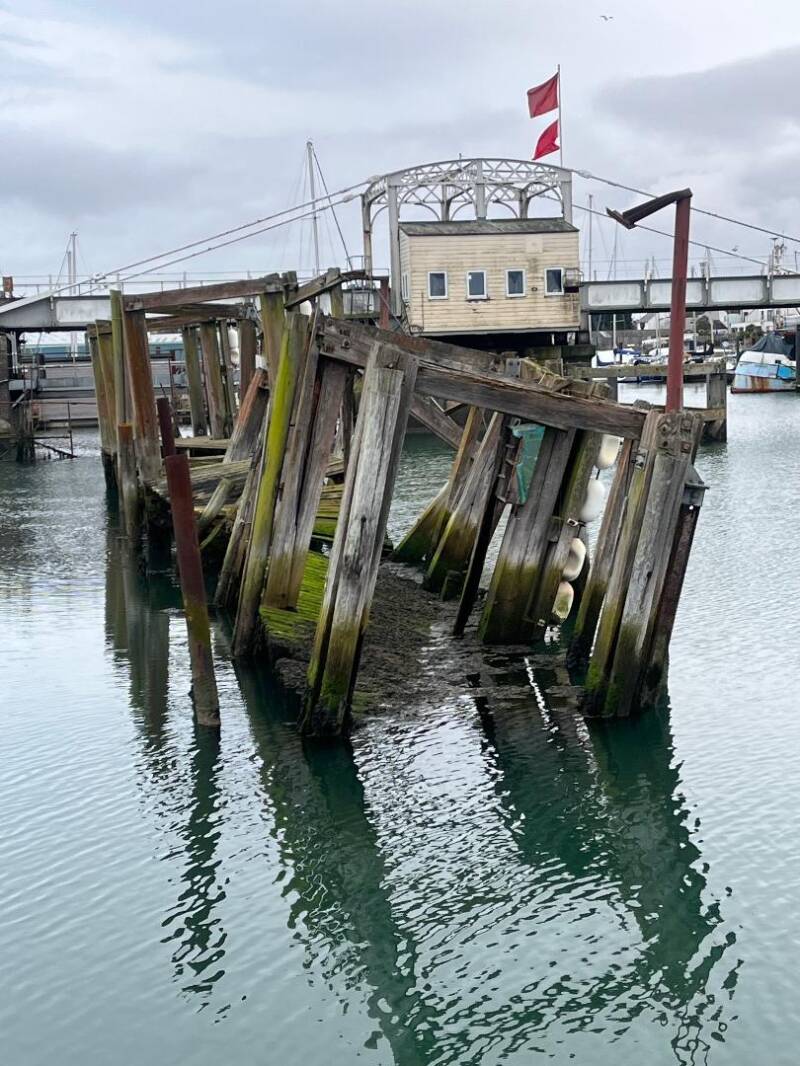
Our journey then took us inland to Oulton Broad, one of the southern gateways to the Norfolk and Suffolk Broads. The broad itself was created centuries ago when medieval peat diggings flooded, leaving behind the vast expanse of water we see today. Walking along the shoreline, we found the skeletal remains of old jetties and decaying boats, their weathered timbers slowly being reclaimed by nature. They stood like monuments to another age of boating and industry.
Nearby, the Victorian park and bandstand overlooked the water, still retaining much of the charm that would have attracted visitors over a century ago. Across the working shipyard sat a military vessel, an imposing contrast to the pleasure boats bobbing gently nearby.
As if the day hadn't already provided enough curiosities, we stumbled across a stolen and abandoned car. It looked strangely out of place among the tranquil surroundings and instantly became the subject of much speculation. How it got there and what had happened to it remained another unanswered mystery to add to the growing collection.
From industrial waterfronts and abandoned relics, the day took a completely different turn when we arrived in Somerleyton.
The village could not have felt more different. The green was immaculate, the old village pump stood proudly at its centre, and the whole place seemed to exist at a slower pace. Then came what Arnie immediately christened "The Clown Party."
Villagers dressed in brightly coloured costumes and theatrical make-up were making their way through the streets on their way to perform in the local pantomime. One by one they appeared from cottages and side roads, creating a wonderfully surreal scene. Arnie's description may not have been entirely accurate, but it was certainly memorable.
Our final discovery was hidden away through a tunnel of trees. Emerging from the leafy passage was Somerleyton's wonderfully preserved railway station. Opened in the Victorian era and still serving passengers today, it felt like stepping back in time. The station sits quietly among the trees, a reminder of the days when the railway first brought visitors and prosperity to this corner of Suffolk.
As the sun began to sink lower, we returned to Peggy with muddy shoes, tired legs and plenty of stories. We had explored ancient pathways, cycled to the edge of Britain, searched unsuccessfully for a missing church, discovered forgotten remnants of maritime history, encountered a mystery car, and stumbled upon what will forever be remembered as Arnie's Clown Party
Peggy and Crew

Create Your Own Website With Webador