Read our latest news
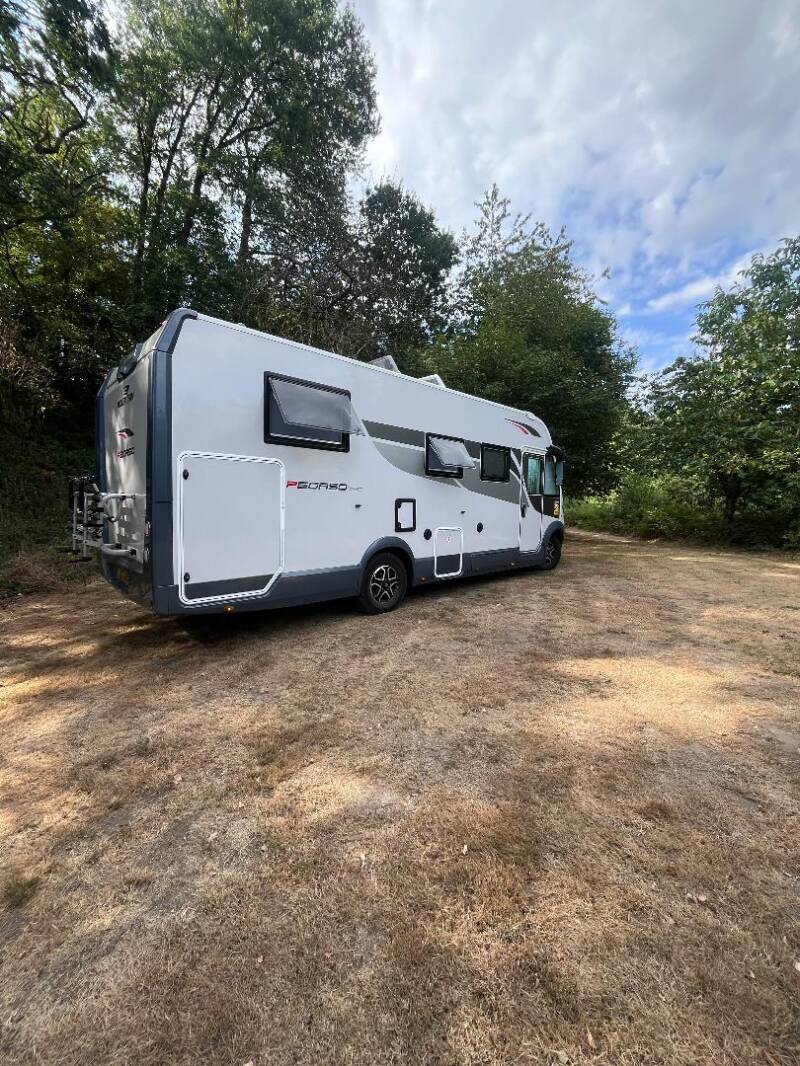
There are many elegant ways to enter France. Ours involved leaving Spalding, driving through the night to Dover and boarding the 12:20 a.m. Irish Ferries crossing to Calais in our trusty motorhome, Peggy.
By the time we arrived in France at around 2 a.m., elegance had given way to the immediate need for sleep. Fortunately, we headed to the Vins superstore, where motorhomes could park free for a couple of hours. The French really are wonderfully accommodating to motorhomers - although placing sleepy travellers beside a wine superstore might be considered either excellent hospitality or clever marketing.
Coffee, Croissants and Accidental Fluency
After a short sleep, I woke with an important mission: breakfast.
Despite never having formally learned French, I confidently ordered two coffees and pains au chocolat at the patisserie. The words emerged from somewhere deep within my brain, possibly the section reserved for essential survival phrases involving caffeine and pastry.
Feeling refreshed, and rather pleased with my sudden linguistic brilliance, we climbed back into Peggy. Arnie took the wheel, and we set off across Normandy.
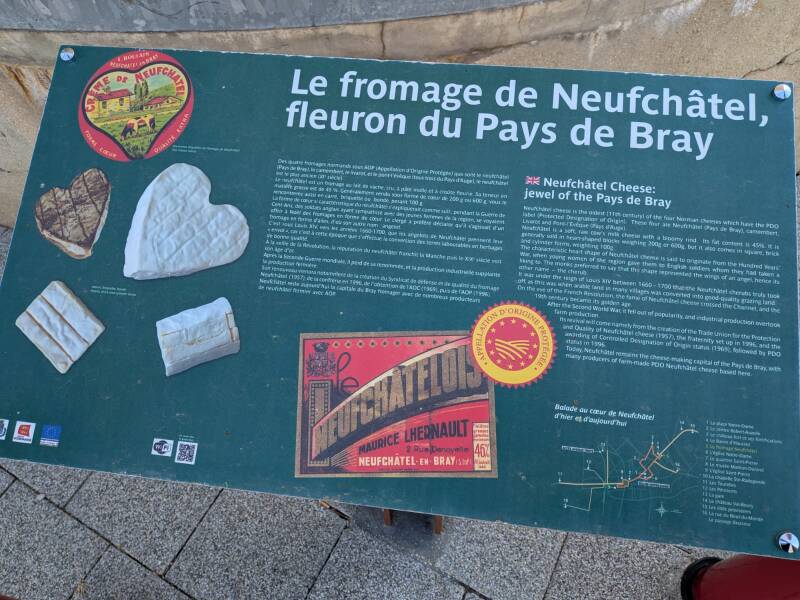
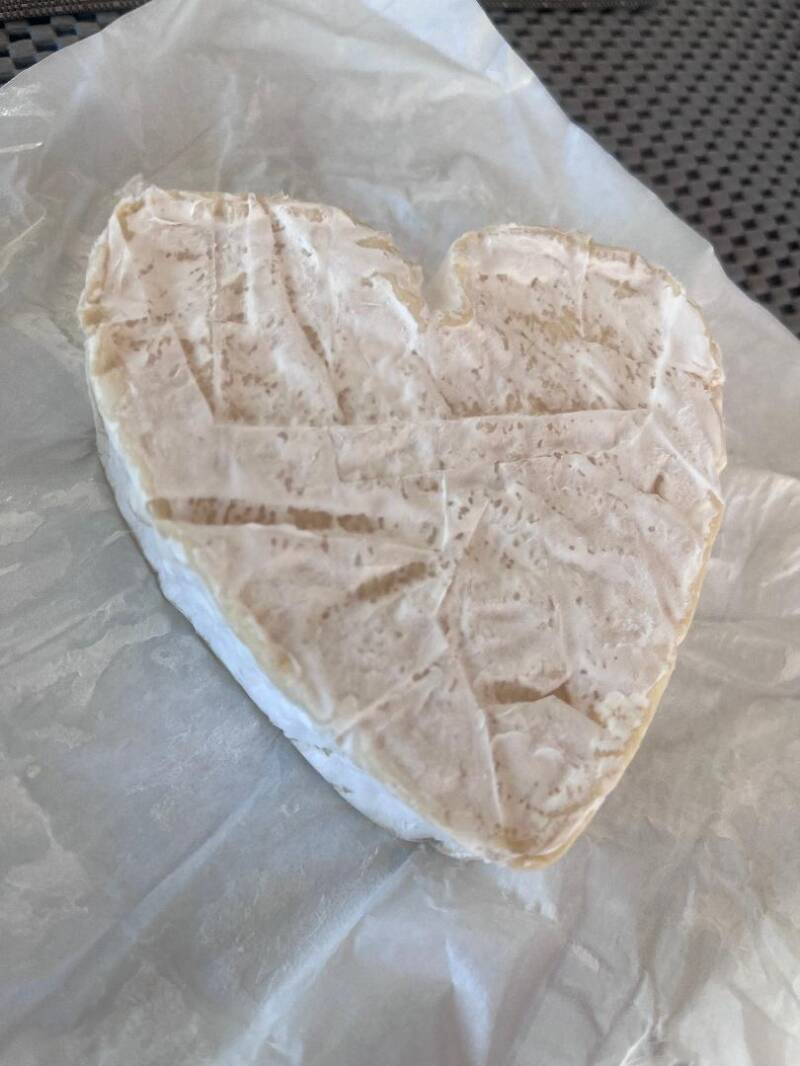
Our first stop was Neufchatel-en-Bray, a historic market town famous for its legendary heart-shaped cheese. This cheese is said to be one of Normandy's oldest varieties, with a history stretching back many centuries. According to local legend, during the Hundred Years' War, young Norman women gave heart-shaped cheeses to English soldiers as tokens of affection.
Sadly, the cheese hall was closed.
We had arrived during a French national holiday, so really, this was our own fault. France had not concealed its national calendar specifically to deprive us of cheese, although at the time it felt personal.
Luckily, the local Aldi came to the rescue. We bought the famous cheese there, and it was every bit as delicious as promised. It was also very quickly devoured. Romance may have inspired its heart shape, but hunger determined its lifespan.
Much of Neufchatel-en-Bray was destroyed during the Second World War, although the town's museum looked well worth visiting. We were particularly intrigued by a street that had apparently been raised intact to allow something to pass beneath it. Was it a railway line? Was it a river? We never quite established the answer, but it was impressive either way.
My French Modelling Career Begins in Ry
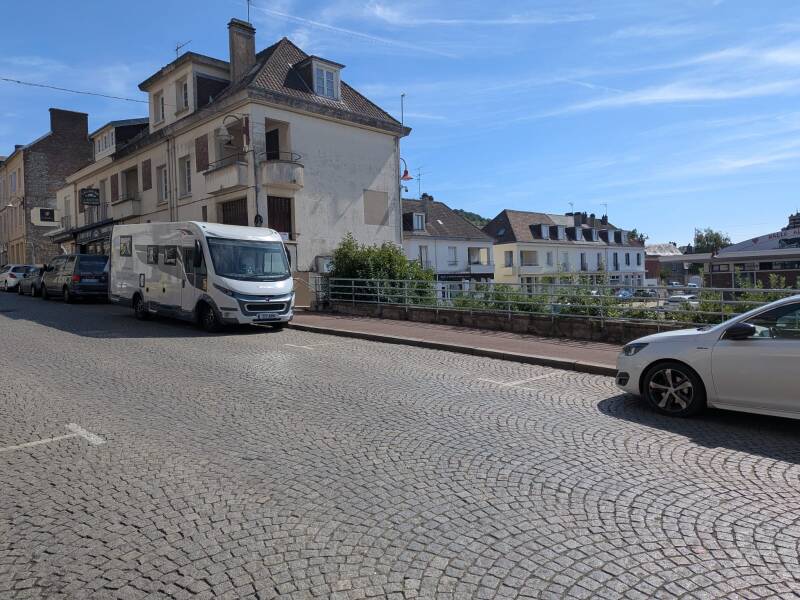
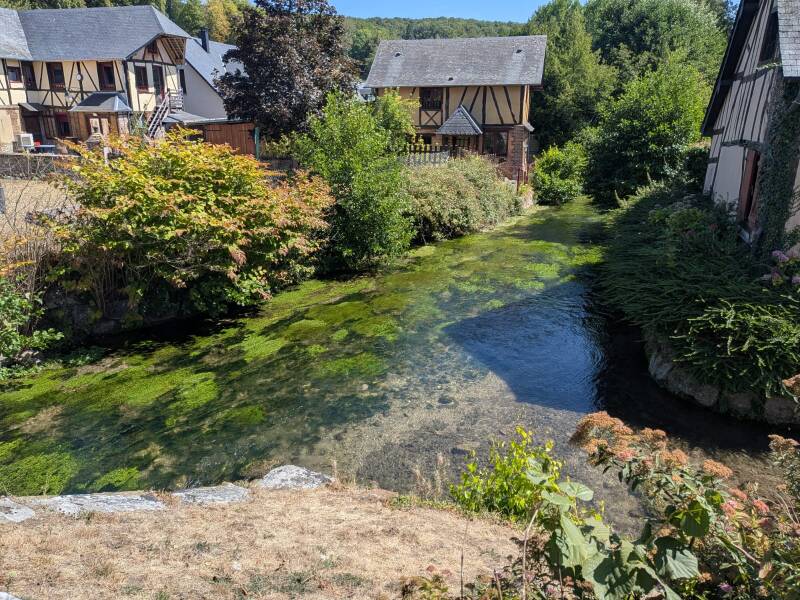
Our next stop was unplanned but became one of the loveliest discoveries of the trip: Ry.
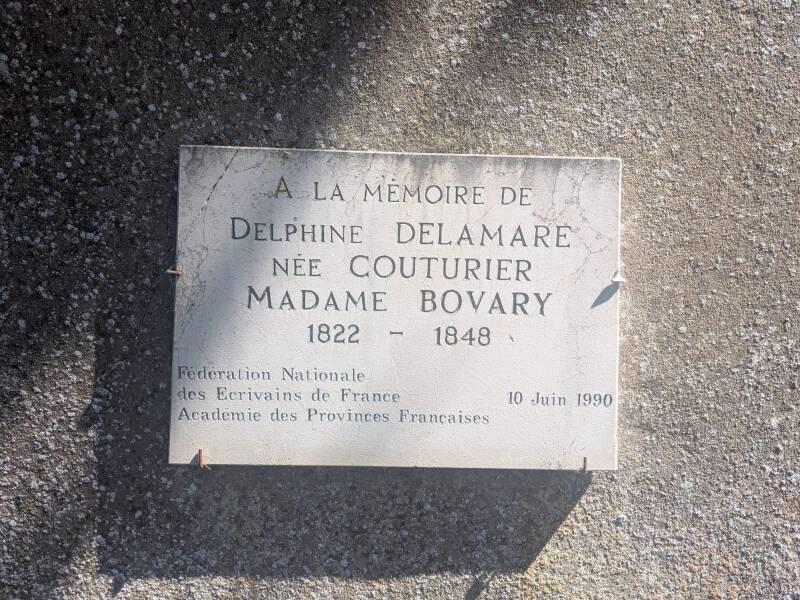
This charming Norman village is closely associated with Gustave Flaubert's Madame Bovary. Although the fictional town in the novel is called Yonville-l'Abbaye, Ry is often suggested as one of its real-life inspirations. Walking through the village, it was easy to imagine ourselves inside a nineteenth-century French novel - although one featuring a motorhome, an information board and a slightly bewildered Arnie.
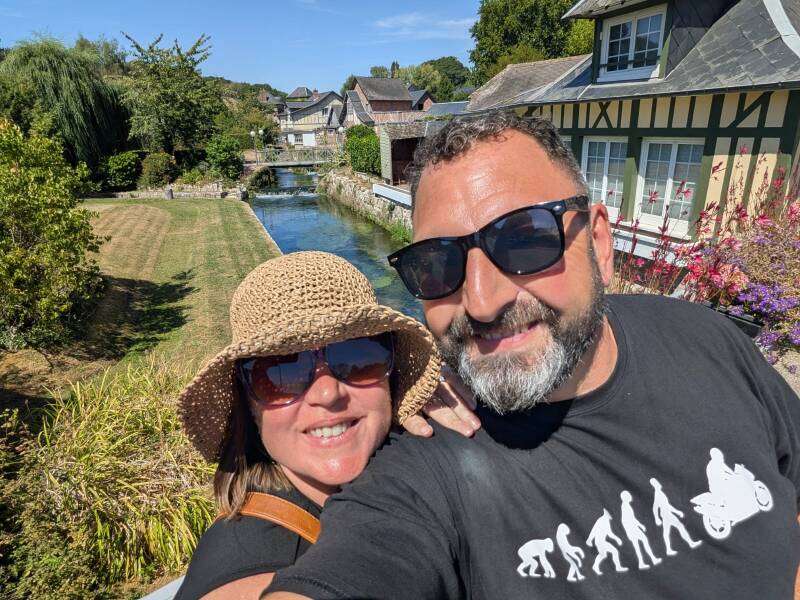
While we were there, a student writing an article about the village asked to take my photograph. Arnie initially agreed to "our" photograph, but it quickly became clear that only I was required. He was politely moved out of the way while I posed beside an information sign.
So, keep an eye on the French press. My international modelling career may already have begun.
Rouen: Cathedrals, Cobbles and Cannibal Meatballs
Rather surprisingly, we made it all the way to Rouen that day and stopped at a riverside aire near Martainville-Epreville, around a 20-minute walk from the historic centre.
There, we met a lovely couple from New Zealand who spend six months travelling in their motorhome and the other six months back home. That sounds like a very sensible life plan to me. They highly recommended Croatia for a future trip, so naturally that destination has now found its way onto the ever-growing list.
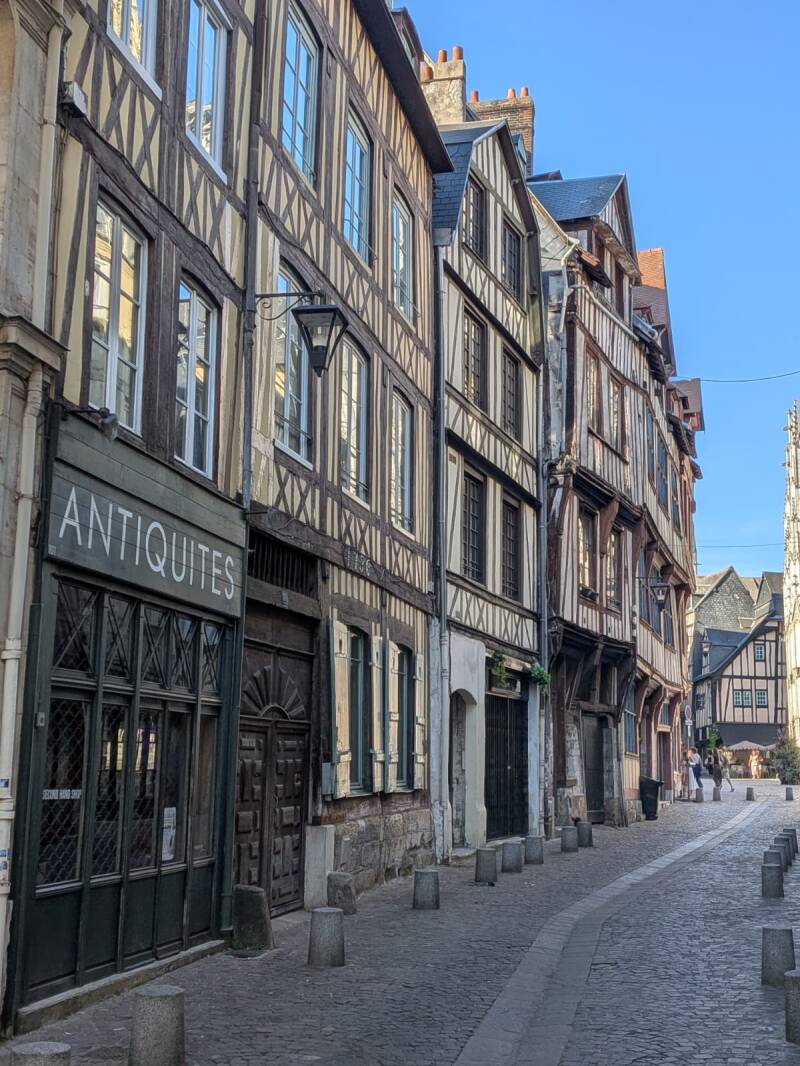
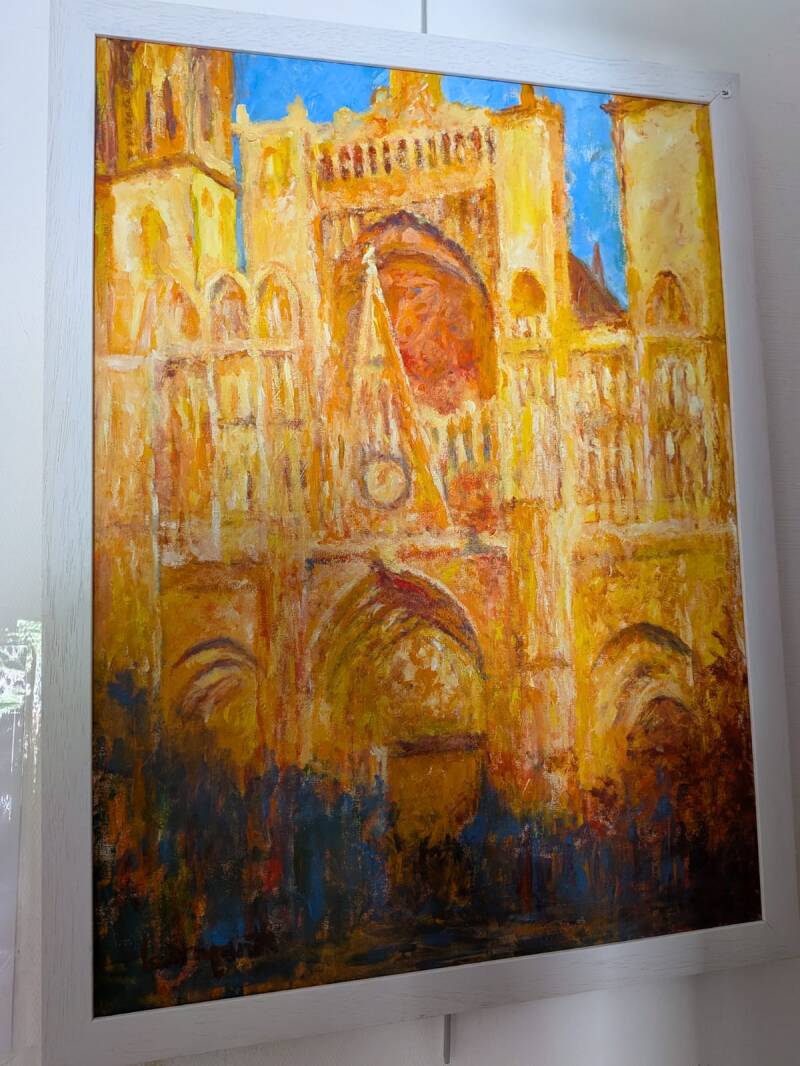
Rouen was spectacular. Its medieval, half-timbered buildings leaned over the cobbled streets as though they were trying to hear the latest gossip. Between them stood the city's magnificent Gothic cathedral, its elaborate facade changing colour in the golden evening light.
It was immediately obvious why Claude Monet painted Rouen Cathedral repeatedly, capturing it under different light and weather conditions. We saw only one evening's transformation, and even that was mesmerising.
Dinner was delicious. Arnie chose what appeared on the translated menu as "cannibal stuffed meatballs." We assumed this was a translation error rather than a confession from the chef. I enjoyed a rich red wine while Arnie chose a French beer, both of which were very tasty and significantly improved our willingness to continue walking.
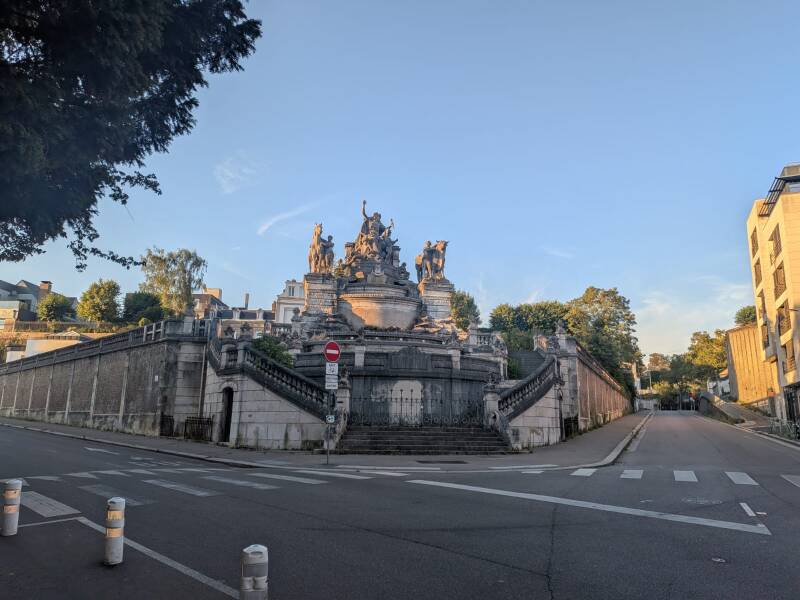
Rouen is famous for its many churches, several of which are grand enough to rival cathedrals elsewhere. Our problem is that whenever we spot something interesting in the distance, we have to investigate it. This habit added quite a few steps to the evening but led us to an extraordinary old fountain that once formed part of the city's water supply. It had been fenced off because the stone steps were deteriorating, which felt very unfair when the rest of the structure had managed to survive centuries of history.
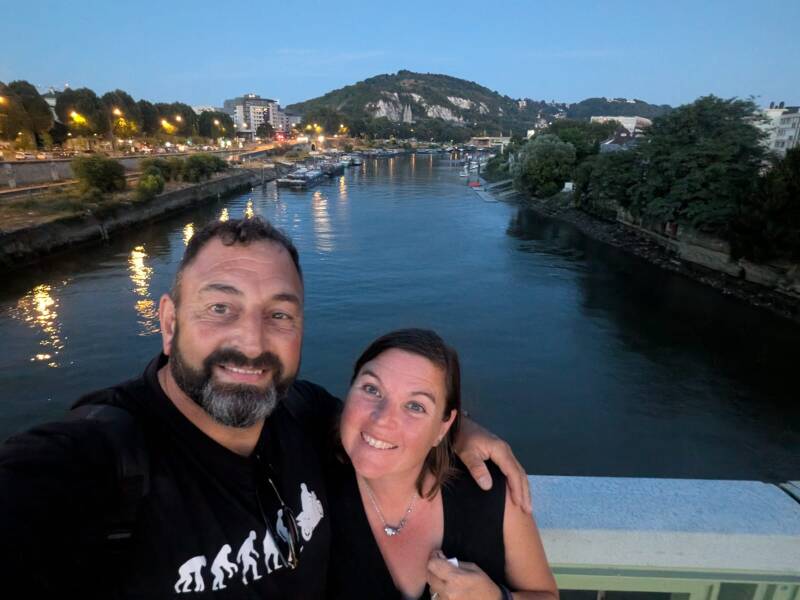
Eventually, we retraced our route past all the sights and returned to Peggy. The riverside setting was attractive, although the night itself was rather noisy. Apparently, picturesque rivers do not automatically come with a volume control.
Monet's Pocket of Paradise
The following day brought one of my absolute must-sees: Claude Monet's house and gardens at Giverny.
Once again, France treated Peggy well. The free car park had a dedicated motorhome area backing onto fields and surrounded by trees. It was peaceful, green and idyllic - exactly the sort of setting that makes you consider abandoning normal life and living permanently in a motorhome.
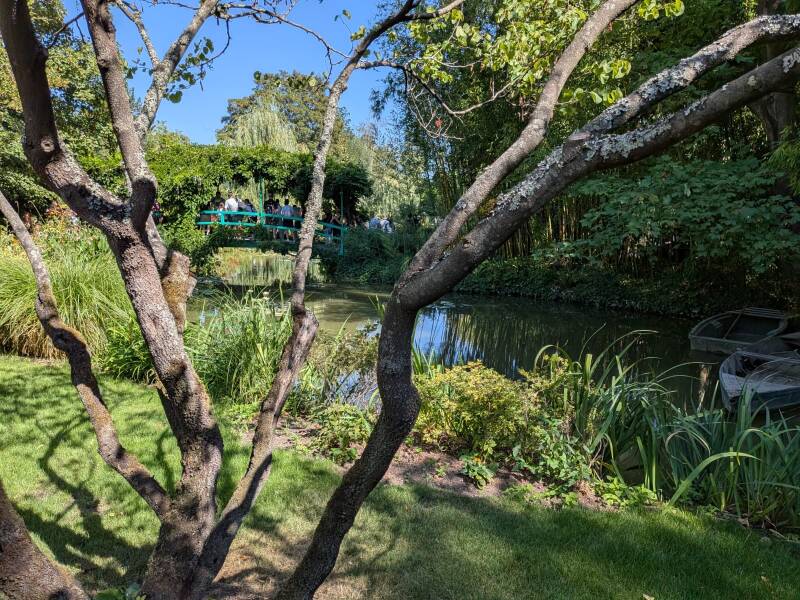
Monet lived at Giverny for more than 40 years and gradually transformed the property into the garden he wanted to paint. The famous water garden, lily pond and Japanese bridge appeared just as they do in his paintings. Sunlight danced across the water, reflections shimmered between the lily pads, and for a moment it felt as though we had stepped straight into an Impressionist canvas.
Monet's house was simple, colourful, light and airy. It was easy to understand why so many of his artist friends became long-term visitors, and why some settled in the village. He had created his own pocket of paradise.
Unfortunately, a great many other people had also discovered this pocket of paradise. At times, we were shuffled through the gardens like an unusually cultured herd of cattle.
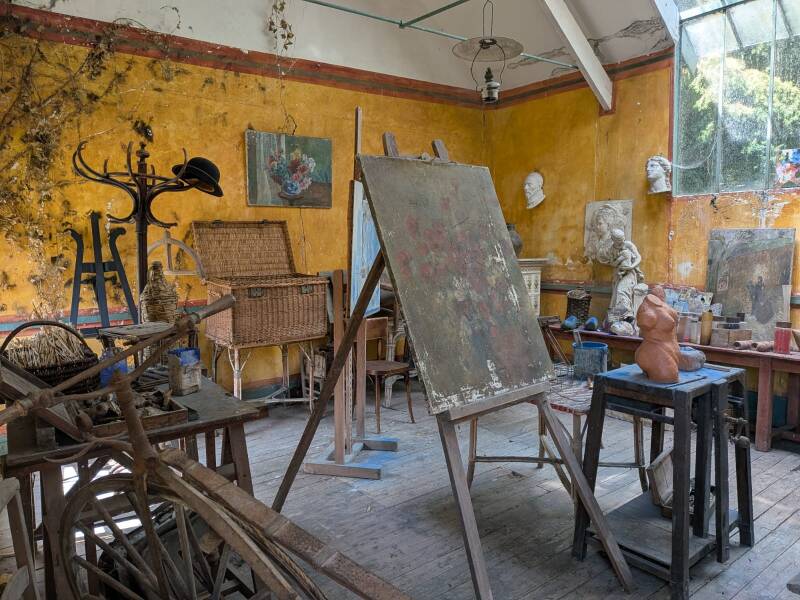
We explored the village too, taking in the former hotel, vegetable garden, bar, studio, church and Monet's tomb. Reproductions of paintings placed around the village helped connect the real landscapes with the works they inspired, bringing Monet's world vividly to life.
Towers, Hill Towns and the Road to Roy and Mandy
The next day, Peggy carried us to Verneuil-sur-Avre, with its fascinating tower and atmospheric historic quarter. Founded in the medieval period, the town still contains an impressive collection of old timber-framed houses and heritage buildings.
We then made a brief leg-stretching stop at Mortagne-au-Perche, a historic hill town with roots reaching far beyond the sixteenth century. Its elevated streets and elegant old buildings made it a lovely place for a wander, although this was only a quick visit before the main event.
Our real destination was Villaines-la-Juhel, home to Arnie's long-time friends Roy and Mandy.
It was wonderful to meet them. They were warm, generous, down-to-earth and incredibly welcoming. Their beautiful French gite had an old bread oven, a watermill and a well-stocked fishing lake surrounded by woods. It was the kind of idyllic place that estate agents describe breathlessly, except this one genuinely deserved it.
Roy and Mandy took us out for a French-Chinese buffet experience. I tried frogs' legs for the first time. They were tasty, although there was not much meat on them - frogs have clearly missed an opportunity by neglecting leg day.
The buffet offered almost everything imaginable, including fruit platters, sushi, roast lamb and seafood. Naturally, I ate far too much. It would have been rude not to conduct thorough research.
Afterwards, we stopped for fuel and got a wonderful view of the eclipse. Arnie even charmed a kind French man into lending us viewing glasses so that we could all watch safely.
Roy and Mandy then used their invaluable local knowledge to take us up to the beautiful Chapelle du Montaigu. We missed the final part of the eclipse, but the setting more than compensated. The little chapel stood on a hill reached by wooded paths, with sweeping views over the rolling countryside. It felt peaceful, magical and completely removed from the modern world.
That evening brought more good wine and a great deal of talking. We slept with the sounds of wild boar and splashing fish as our background music. I slept wonderfully. The beautiful setting helped, of course, although the red wine deserves an honourable mention.
Thank you, Roy.
Markets, Sieges and Yet More Cheese
The next day was devoted to spending time with Arnie's old friends and my new ones.
We began at the market in Evron, followed by a look at the impressive basilica of Notre-Dame de l'Epine. We were treated to local goat's cheese with fig, because apparently this trip had become an unofficial Tour de Fromage.
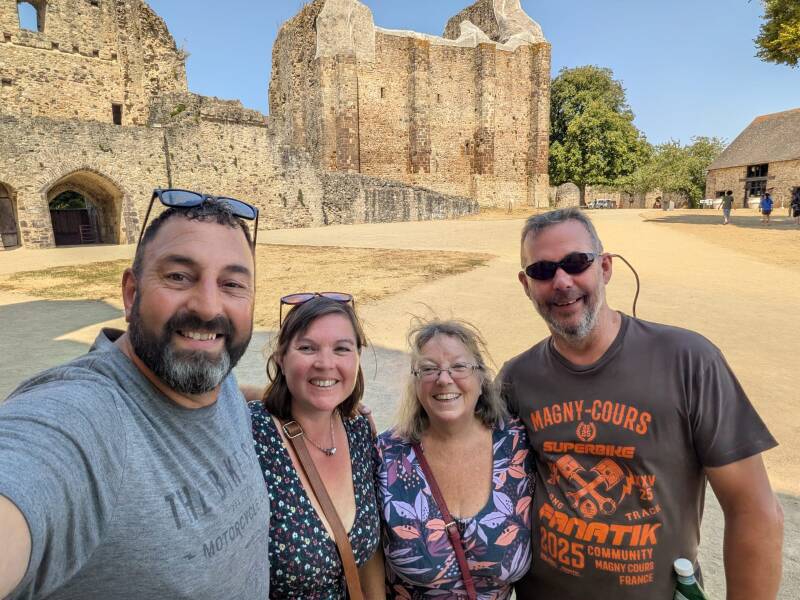
Then we travelled to one of my favourite places, Sainte-Suzanne, a wonderfully characterful walled town set high above the surrounding countryside. Its medieval defences were so formidable that William the Conqueror's forces struggled for around three years to take it. Any town capable of holding out against William the Conqueror for that long deserves respect - and probably a good lunch.
Its old streets, stone walls and intriguing shop signs, including those for tarot readings, gave the town a wonderfully mysterious atmosphere.
Lunch involved more cheese, bread and French pastries, including Paris-Brest, the ring-shaped choux pastry created to commemorate the Paris-Brest-Paris bicycle race. Eating one requires considerably less effort than completing the original cycling event, which is precisely why I prefer the pastry version.
Later came a barbecue, and once again the wine was poured generously.
After one more peaceful night, it was time to say goodbye. Before we left, Roy and Mandy introduced us to NOZ, a shop specialising in discounted and clearance stock. It was like an enormous, delightfully disorganised market where bargains were hidden everywhere. My daughter Holly benefited from some new clothes, while I secured several boxes of good wine for our onward journey. Everyone has different priorities.
After hugs and heartfelt thanks, we climbed back into faithful Peggy and headed for the coast.
Honfleur: Boats, Mussels and Artists
Our next overnight stop was Honfleur, where we paid €20 for an aire beside the basin and found ourselves right in the middle of everything.
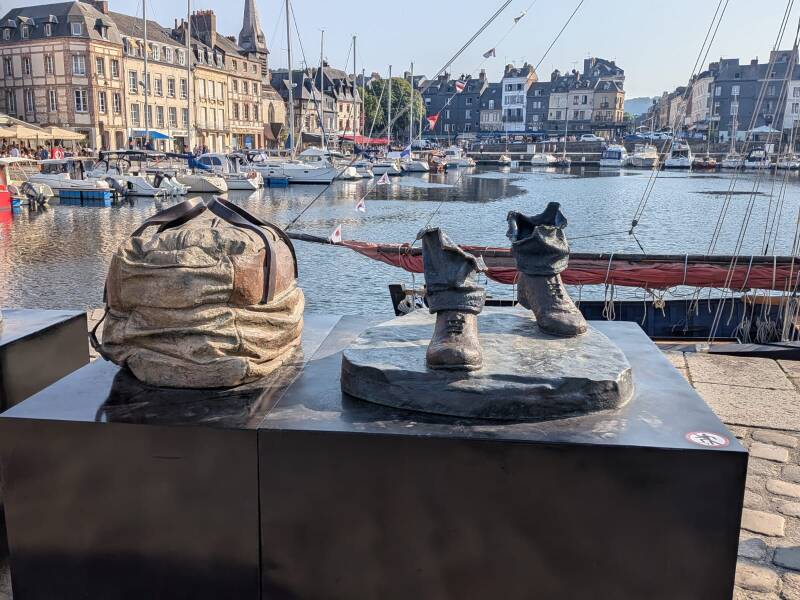
The view was wonderful: working boats mixed with expensive yachts, a Ferris wheel rose above the waterfront, and tall, narrow houses wrapped around the old harbour. Many of these historic buildings have slate-covered facades and crowd together in a way that makes the harbour instantly recognisable.
Honfleur has long attracted artists, including Monet and his mentor Eugene Boudin. With constantly changing light reflecting from the water and those distinctive houses lining the basin, it was easy to see why.
We walked around, ate mussels and soaked up the atmosphere. It was a perfect overnight stop.
The Bridge, the Abbey and the Toilet Incident
The following morning, it was time to begin turning back towards Calais. Due to what I will generously call a minor planning miscalculation, Arnie faced a longer day of driving. Fortunately, it all worked out.
We began by crossing the spectacular Pont de Normandie, the enormous cable-stayed bridge spanning the Seine estuary. It rises dramatically above the water and feels as though Peggy is briefly attempting to join the aviation industry.
We continued to Bernay, officially recognised as a Town of Art and History. Its half-timbered medieval streets were full of classic Normandy character, and the town's former abbey dates back to the eleventh century.
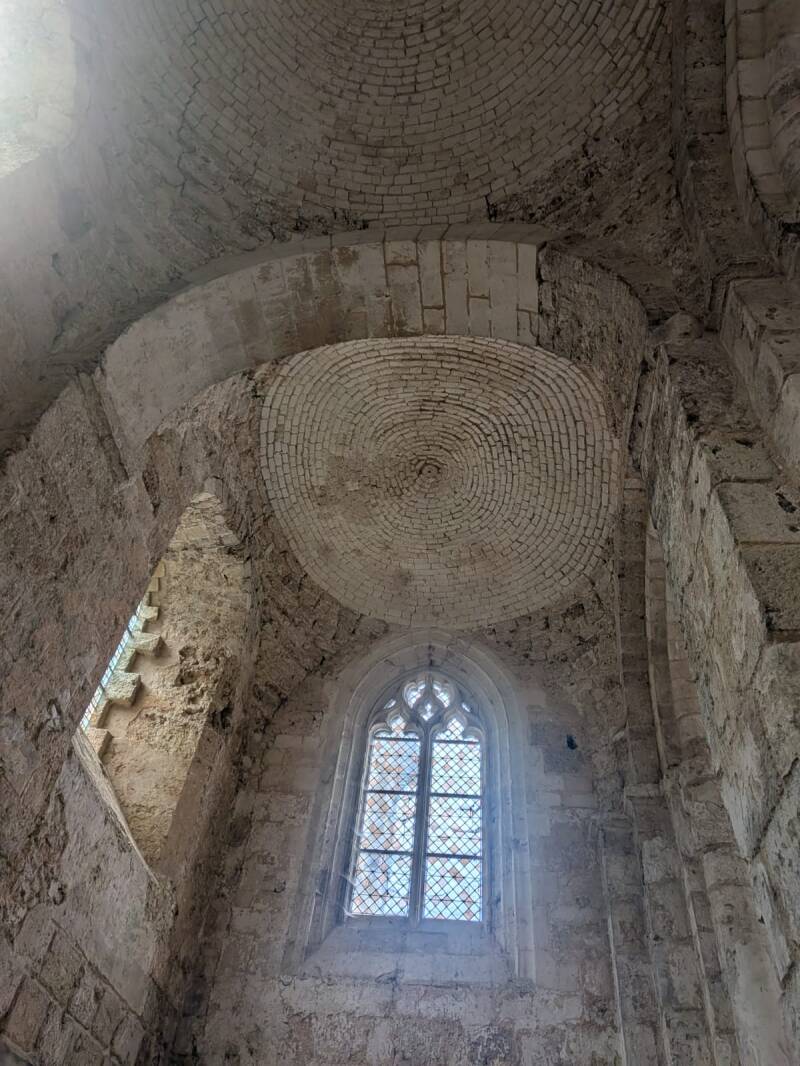
We also entered the shell of a church. Its bare, almost skeletal interior offered a stark contrast to the richly decorated cathedrals and churches we had already seen.
Then came the public toilet incident.
We had found a free automated toilet, but failed to remember that these facilities lock and clean themselves between users. Poor Arnie became trapped inside.
I rushed into a nearby cafe and attempted to explain the emergency in my limited French. Through a mixture of mime, panic and increasingly elaborate gestures, I apparently convinced the staff that I personally needed to use their toilet several times. They very kindly kept offering it to me for free.
Eventually, the owner came to my rescue. He spoke good English and had a till full of change, which he happily exchanged for my €2 coin.
Merci bien!
Arnie was liberated, no international rescue operation was required, and we never again forgot the five-minute cleaning cycle.
Saint-Valery and the Final Road North
From Bernay, we travelled onwards to Saint-Valery, a lovely seaside stop where we stayed at a large but crowded aire. We found one of the last spaces, just in front of some fellow English motorhomers.
Despite being busy, the aire itself was pleasant, with trees and generously sized pitches. By now, the journey was drawing towards its end, and neither of us wanted the travelling or exploring to stop.
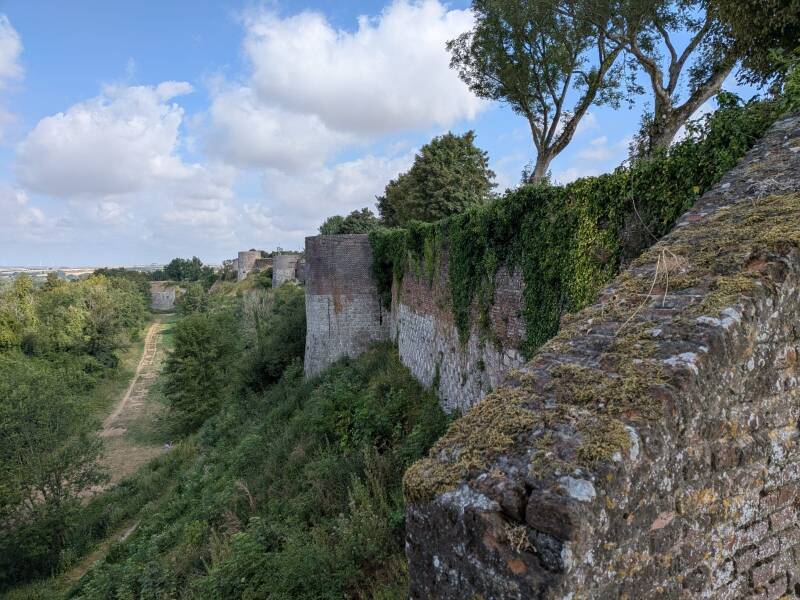
The next day, we visited Montreuil-sur-Mer, where we walked along the historic ramparts and enjoyed panoramic views over the Canche Valley. Despite its name, Montreuil-sur-Mer is no longer directly beside the sea. Centuries of silting changed the landscape, but the old name remained - which feels rather like moving house but keeping your previous postcode for sentimental reasons.
The town's fortifications were strengthened by the famous military engineer Vauban, although parts of the walls are older. Walking the ramparts was a wonderful way to take in both the town and the countryside surrounding it.
Gravelines, a Flea Market and Nearly Falling into the Moat
Our next destination was Gravelines, a fascinating fortified town surrounded by water. Its star-shaped defences reflect the military engineering developed and refined in the age of Vauban, when fortresses were designed with projecting bastions to eliminate vulnerable blind spots.
While walking along the ramparts, I nearly fell into the moat while trying to photograph a sculpture. This was an important reminder that photography works best when the photographer remains on dry land.
More attention to your feet next time, Zoe.
We then discovered what seemed to be the largest car-boot sale and flea market in France. It stretched along street after street, offering everything from vintage treasures to baby clothes and toys. Naturally, we found a few items that simply had to come home with us.
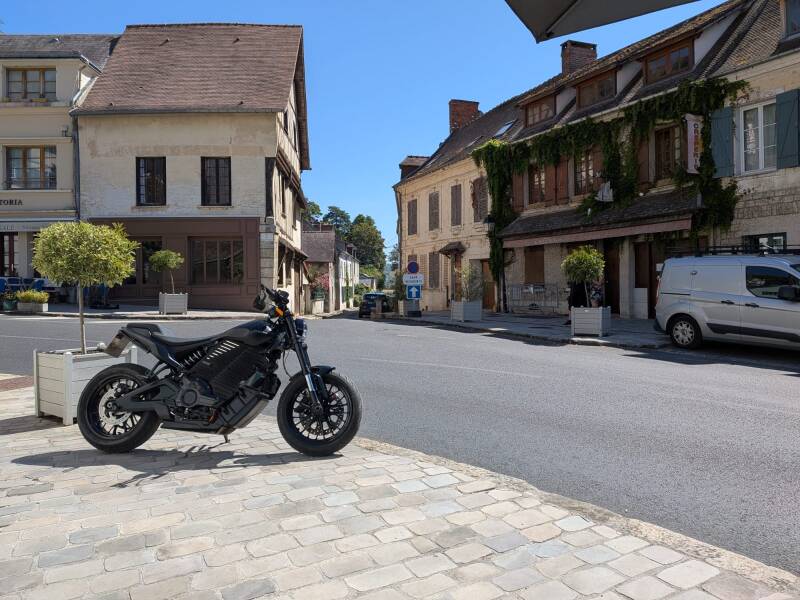
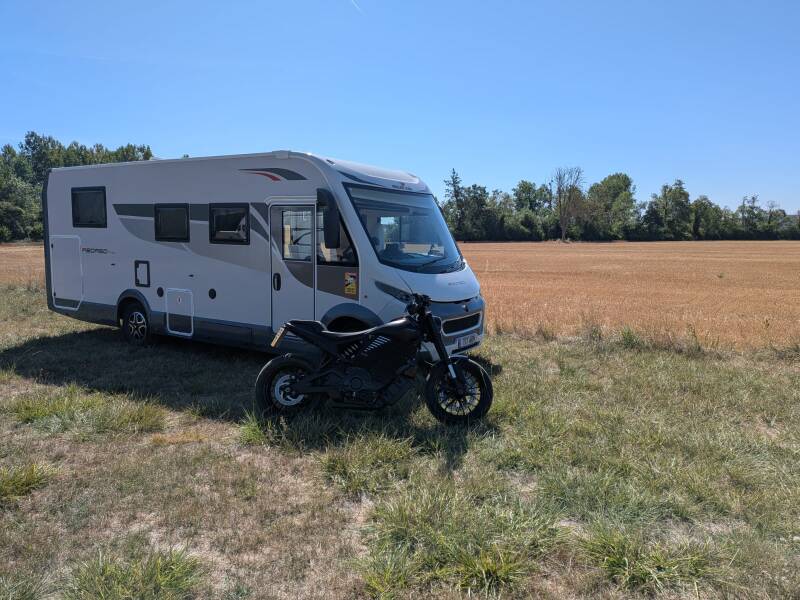
Later, we got the LiveWire out and explored Pointe de Philippe and the surrounding area. The French reaction to the electric motorcycle was wonderful. People stopped to stare, ask questions and begin conversations.
Our French failed us fairly regularly, but enthusiasm, pointing and smiling carried us through. One teenage boy looked at the bike with complete wonder and simply said:
"Electric?"
His tone made it sound as though Arnie had arrived from the future.
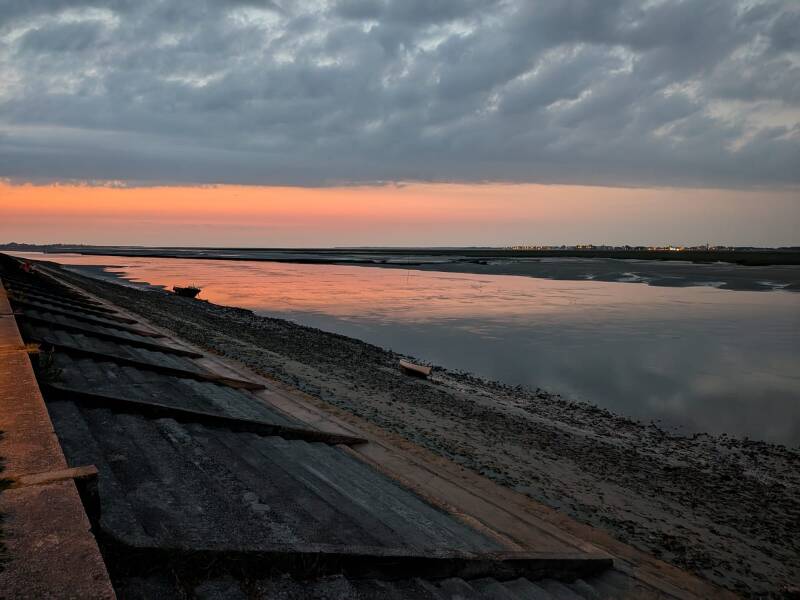
That night, we stayed beside the marina at a free aire in Gravelines. It was busy but peaceful, with a lovely view - an excellent final night in France.
Calais and the Heavy Box of Regret
On our last half-day, we drove into Calais and parked free beside the basin.
Our mission was to find a military shop and buy items for Arnie's 15-year-old son, Oliver, and my 15-year-old son, Owen. What we failed to consider was the distance back to Peggy after purchasing a large, heavy box.
The walk out had seemed perfectly reasonable. The return journey felt like an endurance challenge.
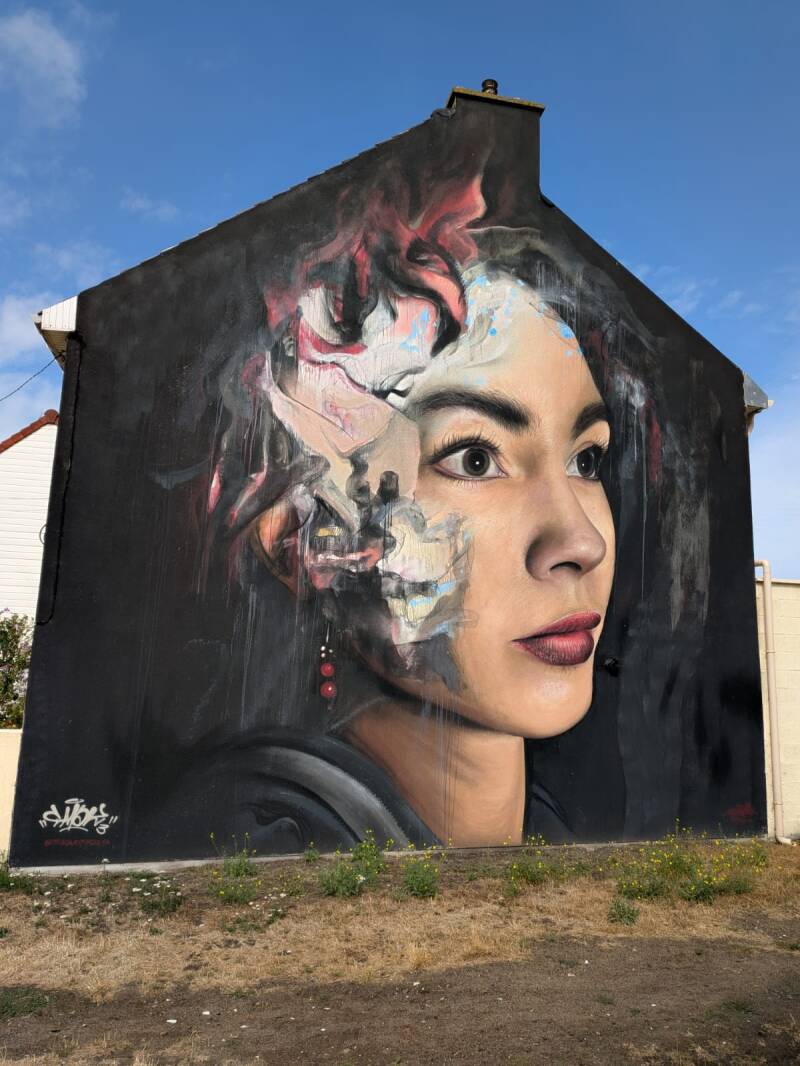
Between us, we carried the box all the way back, with both the contents and our relationship intact. The magnificent street-art murals along the route provided welcome excuses for me to stop and take photographs. This time, I kept both feet planted firmly on the ground.
Finally, we drove to the ferry terminal and boarded for the journey home.
Au Revoir, France
Our adventure in Peggy had given us medieval streets, magnificent cathedrals, heart-shaped cheese, Monet's gardens, warm friendships, frogs' legs, an eclipse, several glasses of red wine, an automated toilet rescue and one near-dive into a historic moat.
We had travelled from Spalding to Calais, across Normandy and back again, discovering that some of the best moments are completely unplanned: an unexpected village, a magical chapel, a conversation conducted almost entirely through gestures or a sudden appearance in a future French publication.
Most importantly, Peggy had carried us faithfully through every winding road, crowded aire and cheese-related emergency.
We returned home with souvenirs, wine, photographs, new memories and one unavoidable conclusion:
France, Normandy and motorhome life had completely won us over.
Until next time Peggy and Crew



Create Your Own Website With Webador